朱耀伟(CHU, Yiu Wai Stephen)是香港大学现代语言及文化学院教授,同时也是香港研究课程总监。他还担任香港大学中文学院教授一职。
本页面主要目录有关于朱耀伟的:人物简介、主要作品、文编、其他等介绍

朱耀伟(CHU, Yiu Wai Stephen)是香港大学现代语言及文化学院教授,同时也是香港研究课程总监。他还担任香港大学中文学院教授一职。
本页面主要目录有关于朱耀伟的:人物简介、主要作品、文编、其他等介绍
CHU, Yiu Wai Stephen
中华人民共和国
香港中文大学(博士),旧金山州立大学(硕士),香港中文大学
第十二届(2011-2012)香港中文文学双年奖(文学评论组)
《当代西方批评论述的中国图像》,《香港粤语流行歌词研究》,《词家有道:香港16词人访谈录》等
朱耀伟曾任香港浸会大学人文及创作系教授、系主任。其研究范围十分广泛,包括香港文化研究,香港电影,粤语歌词,后殖民主义,全球化,中西比较文学等。
朱耀伟的主要著作有《当代西方批评 论述的中国图像》 、《他性机器?后殖民香港文化论集》 、《香港流行歌词研究》 、《光辉岁月:香港流行乐队组合研究》 、《音乐敢言:香港「中文歌运动」研究》 、《香港文学@文化研究》(与张美君合编) 、《本土神话:全球化年代的论述生产》 、《音乐敢言之二:香港「原创歌运动」研究》 、《香港的当劳化徘徊狮子山下寻找信望爱》 ;论文散见《清华学报》、《中外文学》、《当代》、《思与言》、《香港社会科学学报》等。
书名 | 出版社 | 出版时间 |
《Hong Kong Cantopop: A Concise History》 | 香港大学出版社 | 2017 |
《香港研究作为方法》 | 中华书局(香港) | 2016 |
《词家有道——香港十九词人访谈录》 | 香港汇智出版社 | 2016 |
《香港粤语流行歌词研究 七十年代中期至八十年代中期》 | 香港亮光文化 | 2016 |
《香港粤语流行歌词研究 八十年代中期至九十年代中期》 | 香港亮光文化 | 2016 |
《后九七香港粤语流行歌词研究 I & II》 | 香港亮光文化 | 2015 |
《Lost in Transition: Hong Kong Culture in the Age of China》 | 纽约州立大学出版社 | 2013 |
《缱绻香港--大国崛起与香港文化》 | 香港汇智出版社 | 2012 |
《香港粤语流行歌词研究 II》 | 香港亮光文化 | 2011 |
《香港粤语流行歌词研究 I》 | 香港亮光文化 | 2011 |
《香港歌词八十谈》 | 香港汇智出版社 | 2011 |
《文化研究60词》 | 香港汇智出版社 | 2010 |
《词家有道:香港16词人访谈录》 | 广西师范大学出版社 | 2010 |
《Contemporary Asian Modernities: Transnationality, Interculturality and Hybridity》 | 瑞士Peter Lang学术出版社 | 2010 |
《岁月如歌——词话香港粤语流行曲》 | 生活·读书·新知三联书店 | 2009 |
《香港流行歌词导赏》 | 香港汇智出版社 | 2009 |
《词中物》 | 生活·读书·新知三联书店 | 2007 |
《香港的当劳化 徘徊狮子山下寻找信望爱》 | 香港文化会社出版社 | 2007 |
《当代西方批评论述的中国图像》 | 中国人民大学出版社 | 2006 |
《虚拟后乐园:透视电脑游戏文化》 | 香港天窗出版社 | 2005 |
《爱恨地球村:透视全球化现象》 | 香港天窗出版社 | 2005 |
《音乐敢言之二:香港「中文歌运动」研究》 | 香港Bestever出版社 | 2004 |
《本土神话:全球化年代的论述生产》 | 台湾学生书局 | 2002 |
《音乐敢言:香港「中文歌运动」研究》 | 香港汇智出版社 | 2001 |
《香港文学@文化研究》 | 牛津大学出版社 | 2001 |
《中国作家与宗教》 | 中华书局(香港) | 2001 |
《光辉岁月:香港流行乐队组合研究(1984-1990)》 | 香港汇智出版社 | 2000 |
《香港流行歌词研究:七十年代中期至九十年代中期》 | 生活·读书·新知三联书店 | 1998 |
《他性机器?后殖民香港文化论集》 | 香港青文书屋 | 1998 |
“Book review: Sonic Multiplicities: Hong Kong Pop and the Global Circulation of Sound and Image,”China Information27 (July 2013): 255-257.
“Remapping Hong Kong Popular Music: Covers, Localisation and the Waning Hybridity of Cantopop” (co-authored with Eve Leung),Popular Music(Cambridge: Cambridge University Press) 32:1 (Jan 2013): 65-78.
“The Importance of Being Free: Fu©Kin Music as Alternative Pop Music Production,”Inter-Asia Cultural Studies(London: Routledge) 12:1 (March 2011): 62-76.
“Brand Hong Kong: Asia’s World City as Method?” inVisual Anthropology(London: Routledge) 24: 1 & 2 (Jan 2011): 46-58.
“One Country Two Cultures? Post-1997 Hong Kong Cinema and Co-productions,” in Kam Louie ed.Hong Kong Culture: Word and Image(Hong Kong: The University of Hong Kong Press, 2010), 131-145.
“The Donaldization of Hong Kong Society,” in Eva Man & Chu Yiu Wai eds.Contemporary Asian Modernities; Transnationality, Interculturality, Hybridity(Bern: Peter Lang, 2010), 191-211.
“Can Cantopop Industry be Creative? The Transmission and Transformation of Hong Kong Popular Songs,”Chinese Culture: Transmission and Transformation, Wong Wang-chi et. al. eds. (Hong Kong: The Chinese University Press, 2009), 443-475.
“The Importance of Being Chinese: Orientalism Reconfigured in the Age of Global Modernity,”Boundary 2(Durham: Duke University Press) 35:2 (Summer 2008): 183-206.
〈诗有可解、不可解、不必解:《四溟诗话》的诠释观念〉,《汉学研究》25: 2 (2007年12月):165-185。
“The Transformation of Local Identity in Hong Kong Cantopop,”Perfect Beat: The Pacific Journal of Research into Contemporary Music and Popular Culture(Sydney: Dept of Contemporary Music Studies, Macquarie University) 7: 4 (Jan 2006): 32-51.
“Hybridity and (G)Local Identity in Postcolonial Hong Kong Cinema” (revised and expanded version of “(In)Authentic Hong Kong: The ‘(G)Local’ Cultural Identity in Postcolonial Hong Kong Cinema”), in Sheldon Lu and Emilie Yeh eds.,Chinese-Language Film: Historiography, Poetics, Politics(Honolulu: University of Hawaii Press, 2005), 312-328.
〈九十年代香港文化研究:体制化及其不满〉,《香港社会科学学报》(香港:香港城市大学出版社)第26 期(秋/冬2003): 81-102。
〈再读《人间词话》:从西方文论看王国维的境界说〉,《中国文学与文化研究》(台北:学生书局)第1期(2002年6月)页159-182。
“Developing Local Popular Songs in Hong Kong: A Study of the ‘All Cantonese Pop Music Station’ Format,”Media International Australia Incorporating Culture & Policy(Brisbane: Griffith University) No.105 (November 2002): 147-162.
“Postcolonial Discourse in the Age of Globalization,”Social Analysis: The International Journal of Cultural and Social Practice(New York and Oxford: Berghahn Books), 46:2 (Summer 2002): 148-156.
〈全球化年代的后殖民研究〉,Journal of Social Theory (Hong Kong: Hong Kong Polytechnic University) 5 (Spring 2002): 153-175.
〈谁的中国性:九十年代两岸三地的后殖民研究〉,《香港社会科学学报》(香港:香港城市大学出版社)第19期(2001年春/夏),页135-158。
"(In)Authentic Hong Kong: The '(G)Local' Cultural Identity in Postcolonial Hong Kong Cinema," Post Script (Jacksonville: Post Script, Inc.) 20 (June 2001): 148-160.
〈(不)真实香港:后殖民香港电影的全球/本土身分〉,《中外文学》(台北:台湾大学外文系)第29卷第10期(2001年3月),页6-18。
“Postcolonial Law in the Global Economy: The Case of Hong Kong,” (co-authored with Sin Wai Man)International Journal of the Sociology of Law(London: Academic Press) 28 (Dec. 2000): 291-309.
〈香港流行歌词中的「香港」本土意识〉,龚鹏程、黎活仁主编:《香港新诗的「大叙事」精神》(嘉义:佛光大学出版社,1999 ),页275-304;浓缩版本载吴俊雄、张志伟编:《阅读香港普及文化1970-2000》(香港:牛津大学出版社,2001),页268-275。
〈小城大说:后殖民叙事与香港城市〉,龚鹏程、黎活仁等主编:《方法论与中国小说研究》(香港:香港大学亚洲研究中心,2000),页403-424。
〈全球化城市的本土神话:《玻璃之城》的香港图像〉,《中外文学》(台北:台湾大学外文系)第28卷11期(2000年4月),页50-63。
〈全球化年代的国族论述:从后国族意识到中国论述〉,《思与言》(台北:思与言杂志社)第38卷第1期(2000年3月),页185-218。
〈同途殊归:八十年代香港的比较文学〉,刘汉初、黄耀堃、龚鹏程、黎活仁编:《香港八十年代文学现象》(台北:学生书局,2000),页273-300。
〈全球化论述生产年代的中国图像〉,《清华学报》(新竹:清华大学)新29卷第3期(1999年9月),页233-260。
〈五四的反思:从现代到后现代〉,《中外文化与文论》(成都:四川教育出版社)第六期(1999年8月),页30-33。
“In the Name of Law: Legality and Morality in Postcolonial Hong Kong,” (co-authored with Sin Wai Man),International Journal of the Sociology of Law(London: Academic Press) 27 (June 1999): 185-205.
“Whose Rule of Law? Rethinking Postcolonial Hong Kong Legal Culture,” (co-authored with Sin Wai Man),Social and Legal Studies(London: Sage) 7 (June 1998): 147-169.
〈全球化年代的知识生产〉,《中外文化与文论》(成都:四川大学出版社)第四期(1997年12月),页66-81 。
〈在香港谈后殖民论述〉,《中外文化与文论》(成都:四川大学出版社)第二期(1996年10月),页27-30。
“The Other Territories: On the Meaning of the Other Discourse in the Cultural Periphery,”Sun Yat-sen Journal of Humanities(Kaohsiung: National Sun Yat-sen University)4 (Jan. 1996): 127-148.
〈书评 - 原始情欲:视象性、性、人种志与当代中国电影〉,《人文中国学报》(香港:香港浸会大学)第三期(1996年12月),页225-232。
“The Politics of Marginality: Rethinking the Territorialization of the Other Discourse,”Shue Yan Journal of English/Cultural Studies(Hong Kong: Shue Yan College) 1 (Fall 1995): 1-18.
“Between Legal and Cultural Colonialism: The Politics of Legitimation of the Cultural Production in Hong Kong” (co-authored with Sin Wai Man),Tamkang Review(Taipei: Tamkang University)(Spring and Summer 1995): 49-88.
〈书评 -《中国文学思想选读》〉,《人文中国学报》(香港:香港浸会大学)第一期(1995年4月),页313-324。 〈当代批评论述中的「空间化」迷思〉,《当代》(台北:合志文化事业)第103期(1995年1月),页14-25。
〈含混.并置.后殖民:从《暗恋(·)桃花源》想起〉,《中外文学》(台北:台湾大学外文系)第21卷12期(1993年5月),页93-103 。
“Interpretation, Textuality, Paradox: From Reading Hermeneutics’ Reading towards a Chinese Hermeneutics,”Tamkang Review(Taipei: Tamkang University)Vol. XXII (Autumn 1991 - Summer 1992): 341-371.
〈词来的春天:晚近香港流行歌词探论〉,《中国艺术报》,2012年10月17日,页6-7。
〈今夕是林夕〉,CASH Music Achievement Award 2012 Booklet (Nov 2012), Composers and Authors Society of Hong Kong.
〈辉耀香江半世纪〉,《明报月刊》46:7 (2011年7月),页33-35。
〈后九七香港粤语流行歌词概说〉,冯应谦编《歌潮‧汐韵:香港粤语流行曲的发展》,(Hong Kong: Subculture, 2009), 87-153.
〈2005城市漫游: 香港空间回忆与想像〉,《第七届香港文学节研讨会论稿汇编》,(Hong Kong : Arts Development Council, 2008), 39-50.
〈早期香港新浪潮电影:「表现不能表现的」〉,罗贵祥、文洁华编《杂唛时代:文化身份、性别、日常生活实践与香港电影1970s》,(Hong Kong: Oxford University Press, 2005), 195-209.
〈一位文化精英的自我反省:读《我这一代香港人》〉,《明报月刊》(2005年8月),页109-110。
〈谁的中国性:九十年代两岸三地的后殖民研究〉, in Baik Youngseo ed., Rethinking East Asia from the Periphery (Seoul: University of Yonsei, 2004) , 86-115.
“Introduction: Between Home and World” (co-authored with Esther Cheung), inBetween Home and World: A Reader in Hong Kong Cinema(co-edited with Esther Cheung) (Hong Kong: Oxford University Press, 2004), xii-xxxv.
“Introduction: Globalization and Hong Kong Film Industry,” inBetween Home and World: A Reader in Hong Kong Cinema(co-edited with Esther Cheung) (Hong Kong: Oxford University Press, 2004), 2-15.
“Who Am I?—Postcolonial Hong Kong Cinema in the Age of Global Capitalism,” inBetween Home and World: A Reader in Hong Kong Cinema(co-edited with Esther Cheung) (Hong Kong: Oxford University Press, 2004), 39-58.
“Introduction: The Politics of Home, Memory, and Diaspora,” inBetween Home and World: A Reader in Hong Kong Cinema(co-edited with Esther Cheung) (Hong Kong: Oxford University Press, 2004), 12-126.
〈香港各大学现当代文学研究单位简介〉,《文讯》(台北:文讯杂志社)第217期(2003年11月),页49-51。
〈人地不宜:悼萨伊德〉,《E+E》(香港:牛棚书院)第8 期(2003 年秋),页9-13。
〈后人类论述与世界公义〉,《当代》(台北:合志文化事业)第191 期(2003 年7 月),页110-125。
〈香港粤语流行歌词创作新与旧──从七十年代说起〉,《第四届香港文学节论稿汇编》(香港:香港艺术发展局,2003),页180-200。
〈香港流行歌词的价值冲突与(不)调和〉,《思》(香港:香港基督徒学会)第83 期(2003 年1 月),页9-14。
〈从披头四到LMF〉,马杰伟编《出卖LMF:粗口音乐档案》(Hong Kong: Ming Cheung, 2001), 167-176.
〈流行曲与偶像文化〉,突破机构编:《传媒及资讯意识教育》(香港:突破出版社,2001),页168-169。
〈流行曲〉,突破机构编:《传媒教育教材套(二)进阶本》(香港:突破出版社,2000),页9-13。
〈流行曲〉,突破机构编:《传媒教育教材套(二)初阶本》(香港:突破出版社,2000),页9-13。
〈以法之名:后殖民香港的法理、道德与公共论述〉,《当代》(台北:合志文化事业)第132期(1998年8月),页118-125 ;第133期(1998年9月),页124-131。
〈后殖民香港中文的省思〉,《1997与香港中国语文研讨会论文集》(香港:香港中国语文学会,1996),页159-168。
〈当代批评论述中的「空间化」迷思〉,《当代》103期(1995年1月):页14-25。
〈操斧伐柯:试论《文赋》所带出的诠释矛盾〉,香港中文大学中文系编:《魏晋南北朝文学论文集》(台北:文史哲,1994),页495-504。
〈她者.中国.影象文化〉,《当代》(台北:合志文化事业)第98期(1994年6月),页120-133。
〈从东方主义的脉络看中国:论述中国批评家的中国观〉,《当代》(台北:合志文化事业)第85期(1993年5月),页48-61。
〈新诗取向再思〉,《新宇》 (香港浸会大学中文系)(1993年4月)页28-37。
“The Significance Beyond Language in Traditional Chinese Poetry and Poetics,”Critical Pursuit(Hong Kong: Critical Pursuit) 2 (1991): 53-75.
〈香港.文化.网〉(Ed.). Cyber Culture Express (Published by Hong Kong Culture and Society Programme, Centre of Asian Studies, The University of Hong Kong) Vol. 1(Dec. 2000).
香港中华书局"文化香港系列"。
香港中华书局"香港词人系列"。
香港电台电视部制作的《正斗中文》节目担任曲词赏析顾问。
第26届香港书展“词情达意——香港粤语流行歌词半世纪”展览顾问。

新亚洲娱乐(英文名:ASIA ENTERTAINMENT GROUP LIMITED,全称:新亚洲娱乐联盟集团有限公司)是一家以从事戏剧制作人及杂项戏剧服务为主的企业,成立于1999年,位于香港特别行政区。旗下分公司包括虎威艺能创作有限公司(TGS HK)、稻草人娱乐创作社(Scarecrow Entertainment)、虎威王朝音乐创作股份有限公司(TGS Music)、虎威活力娱乐传播有限公司(TGS Taiwan)、AK Entertainment(Korea)以及AEG Korea等。
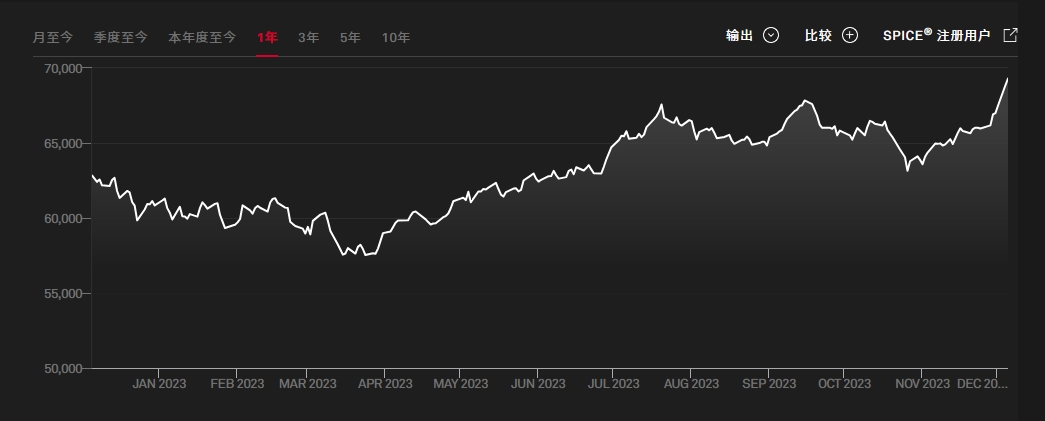
印度孟买SENSEX30指数(又称孟买敏感指数)为印度最被广泛使用的指数,为投资印度的重要参考指标,是由孟买证券交易所发行。由于各类媒体提到的“印度股市”,实际上都是孟买股票交易所,因此,该交易所的SENSEX-30指数几乎成了印度股市的代名词。