of是英语中一个常用的介词,助动词,表示……的;由…制成等意思,在英语中有大量词组使用of,如out of 由于;离开;在…外;在……外,regardless of 不顾;不管;不惜;无论,Of course 当然;自然;当然可以;自是。
本页面主要目录有关于of的:读音及释义、短语、用法、双语例句等介绍

of是英语中一个常用的介词,助动词,表示……的;由…制成等意思,在英语中有大量词组使用of,如out of 由于;离开;在…外;在……外,regardless of 不顾;不管;不惜;无论,Of course 当然;自然;当然可以;自是。
本页面主要目录有关于of的:读音及释义、短语、用法、双语例句等介绍
of
介词
[əv; ɒv]
[əv,ʌv]
the pronunciation of "of"
[英][əv]
[美][ʌv, ɑv,əv]
prep.关于;属于…的;由…制成
aux.助动词 [非标准用语、方言] =have [主用于虚拟语气]
out of 由于;离开;在…外;在……外
regardless of 不顾;不管;不惜;无论
Of course 当然;自然;当然可以;自是
approve of 满意;赞成;赞赏;获准
glimpse of 瞥见;一瞥
hear of 听说;听到;知道;耳闻
capable of 敢于;能;能够;有…能力的
inclusive of 把…包括在内;把……包括在内;包括的
critical of 挑剔;对…苛求的;对…持批评态度
at the end of在…的末尾
bit of 少量的,一点
a great deal of 很多
a handful of 少量的
a (large)number of 许多
a lot of 许多,大量的
lots of 许许多多的
a place of interest 名胜
a waste of 浪费
all kinds of 各种各样的
all sorts of各种各样的
at the head of 在……的前头
at the mercy of 在……的支配下
PREP You use of to combine two nouns when the first noun identifies the feature of the second noun that you want to talk about. 用以连接2个名词,其中第1个名词指明第2个名词的特征 [n PREP n]
PREP You use of to combine two nouns, or a noun and a present participle, when the second noun or present participle defines or gives more information about the first noun. 用以连接2个名词或1个名词和1个现在分词,其中第2个名词或现在分词限定第1个名词或给出有关第1个名词的更多信息 [n PREP n/-ing]
PREP You use of after nouns referring to actions to specify the person or thing that is affected by the action or that performs the action. For example, "the kidnapping of the child" refers to an action affecting a child; "the arrival of the next train" refers to an action performed by a train. 用于动作名词后以说明此动作的受影响者或执行者 [n PREP n]
PREP You use of after words and phrases referring to quantities or groups of things to indicate the substance or thing that is being measured. 用于指数量或物群的词或短语后以表示受量的物质或事物
PREP You use of after the name of someone or something to introduce the institution or place they belong to or are connected with. 用于人或事物名称后以引入其所属或所关联的机构或地点 [n PREP n]
PREP You use of after a noun referring to a container to form an expression referring to the container and its contents. 用于指容器的名词后以构成指该容器及其所容之物的表达 [n PREP n]
PREP You use of after a countable noun and before an uncountable noun when you want to talk about an individual piece or item. 用于可数名词后或不可数名词前以谈论一单片或一项 [n PREP n]
PREP You use of to indicate the materials or things that form something. 用以表示构成某物的材料或物体 [n PREP n]
PREP You use of after a noun which specifies a particular part of something, to introduce the thing that it is a part of. 用于名词后以指明某物的某部分 [n PREP n]
PREP You use of after some verbs to indicate someone or something else involved in the action. 用于某些动词后以表示动作所涉及的人或事物
PREP You use of after some adjectives to indicate the thing that a feeling or quality relates to. 用于某些形容词后以表示与某情感或特质所系之物 [adj PREP n/-ing]
PREP You use of before a word referring to the person who performed an action when saying what you think about the action. 用于指执行了某动作的人的词前以表达对该动作的评价
PREP If something is more of or less of a particular thing, it is that thing to a greater or smaller degree. 用以表示具有某事物的特征 ['more/less' PREP 'a' n]
PREP You use of to indicate a characteristic or quality that someone or something has. 用以表示某人或某事物具有的某种特性和性质
PREP You use of to specify an amount, value, or age. 用以说明某数量、价值或年龄 [n PREP amount]
PREP You use of after a noun such as "month" or "year" to indicate the length of time that some state or activity continues. 用于(month)、(year)等名词后以表示某状态或活动持续的时长 [n PREP n/-ing]
PREP You can use of to say what time it is by indicating how many minutes there are before the hour mentioned. 用于通过表示所提钟点之前有多少分钟来表达时间 [美国英语]
He's a distant cousin of mine.
他是我远房的一个表亲。
I joined the end of the queue.
我站在了这队伍的最后。
She was jealous of his wealth.
她嫉妒他的富有。

新亚洲娱乐(英文名:ASIA ENTERTAINMENT GROUP LIMITED,全称:新亚洲娱乐联盟集团有限公司)是一家以从事戏剧制作人及杂项戏剧服务为主的企业,成立于1999年,位于香港特别行政区。旗下分公司包括虎威艺能创作有限公司(TGS HK)、稻草人娱乐创作社(Scarecrow Entertainment)、虎威王朝音乐创作股份有限公司(TGS Music)、虎威活力娱乐传播有限公司(TGS Taiwan)、AK Entertainment(Korea)以及AEG Korea等。
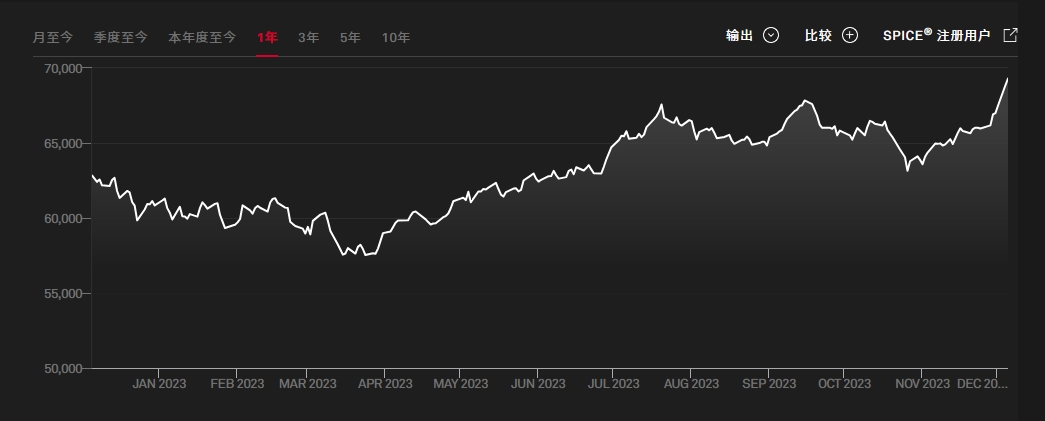
印度孟买SENSEX30指数(又称孟买敏感指数)为印度最被广泛使用的指数,为投资印度的重要参考指标,是由孟买证券交易所发行。由于各类媒体提到的“印度股市”,实际上都是孟买股票交易所,因此,该交易所的SENSEX-30指数几乎成了印度股市的代名词。