李良,电子科技大学副教授。2013年获四川省科技进步一等奖。主持两项国家自然科学基金项目和一项中央高校基本科研业务费项目,参与国家 973 计划前期研究专项课题、国家自然科学基金项目、教育部科学技术研究重点项目、高等学校博士点专项科研基金项目等。获 2008 年四川省科学技术进步二等奖,2013年四川省科技进步一等奖。指导大学生数学建模竞赛多次获得国家一等、二等奖,美国数学建模竞赛一等奖。发表学术论文30余篇,其中第一作者身份发表SCI论文9篇。
本页面主要目录有关于李良的:基本内容等介绍
李良,电子科技大学副教授。2013年获四川省科技进步一等奖。主持两项国家自然科学基金项目和一项中央高校基本科研业务费项目,参与国家 973 计划前期研究专项课题、国家自然科学基金项目、教育部科学技术研究重点项目、高等学校博士点专项科研基金项目等。获 2008 年四川省科学技术进步二等奖,2013年四川省科技进步一等奖。指导大学生数学建模竞赛多次获得国家一等、二等奖,美国数学建模竞赛一等奖。发表学术论文30余篇,其中第一作者身份发表SCI论文9篇。
本页面主要目录有关于李良的:基本内容等介绍
研究方向/ research direction: Numerical Linear Algebra、Numerical Solution of Partial Differential Equations、Computational Electromagnetics / Nanophotonics
获奖情况(Awards)
(排名3)
2008年获四川省科技进步二等奖(排名5)
2015年获电子科技大学唐立新二等奖教金
2014年获校优秀工作者称号
论文及专著发表(Publications)
[1]Yu-Xuan He, Liang Li, Stéphane Lanteri and Ting-Zhu Huang, Optimized Schwarz algo- rithms for solving time-harmonic Maxwell’s equations discretized by a hybridizable discon- tinuous Galerkin method, Computer Physics Communications, 200: 176-181, 2016.
[2]Liang Li, Stéphane Lanteri and Ronan Perrussel, A class of locally well-posed hybridizable discontinuous Galerkin methods for the solution of time-harmonic Maxwell’s equations, Computer Physics Communications, 192:23-31, 2015.
[3]Xian-Ming Gu, Ting-Zhu Huang, Bruno Carpentieri, Liang Li and Chun Wen, A hy- bridized iterative algorithm of the BiCORSTAB and GPBiCOR methods for solving non- Hermitian linear systems, Computers & Mathematics with Applications, 70(12): 3019-3031, 2015.
[4]Liang Li, Ting-Zhu Huang, Yan-Fei Jing and Zhi-Gang Ren, Effective preconditioning through minimum degree ordering interleaved with incomplete factorization, Journal of Computational and Applied Mathematics, 279:225-232, 2015.
[5]Xian-Ming Gu, Markus Clemens, Ting-Zhu Huang, Liang Li, The SCBiCG class of algo- rithms for complex symmetric linear systems with applications in several electromagnetic model problems, Computer Physics Communications, 191:52-64, 2015.
[6]Xian-Ming Gu, Ting-Zhu Huang, Xi-Le Zhao, Hou-Biao Li and Liang Li, Fast iterative solvers for numerical simulations of scattering and radiation on thin wires, J. Electromag- netic Waves and Appl., 29(10):1281-1296, 2015.
[7]Liang Li, Stéphane Lanteri and Ronan Perrussel, A hybridizable discontinuous Galerkin method combined to a Schwarz algorithm for the solution of 3d time-harmonic Maxwell’s equation, Journal of Computational Physics, 256(1):563-581, 2014.
[8]Xian-Ming Gu, Ting-Zhu Huang, Liang Li, Hou-Biao Li, Tomohiro Sogabe and Markus Clemens, Quasi-Minimal Residual Variants of the COCG and COCR Methods for Com- plex Symmetric Linear Systems in Electromagnetic Simulations, IEEE Transactions on Microwave Theory and Techniques, 62(12): 2859-2867, 2014.
[9]Wei-Hua Luo, Ting-Zhu Huang, Liang Li, Yong Zhang and Xian-Ming Gu, Ting-Zhu Huang, Liang Li, Yong Zhang, Xian-Ming Gu, Efficient preconditioner updates for unsym- metric shifted linear systems, Computers & Mathematics with Applications, 67(9): 1643- 1655, 2014.
[10]Liang Li, Stéphane Lanteri and Ronan Perrussel, Numerical investigation of a high order hybridizable discontinuous Galerkin method for 2d time-harmonic Maxwell’s equations, COMPEL, 32(3):1112-1138, 2013.
[11]Liang Li, Ting-Zhu Huang, Guang-Hui Cheng, Yan-Fei Jing, Zhi-Gang Ren and Hou-Biao Li, Solution to 3-D electromagnetic problems discretized by a hybrid FEM/MOM method, Computer Physics Communications, 184:73-78, 2013.
[12]Yong Zhang, Ting-Zhu Huang, Yan-Fei Jing, Liang Li, Flexible incomplete Cholesky fac- torization with multi-parameters to control the number of nonzero elements in precondi- tioners, Numerical Linear Algebra with Applications, 19:555-569, 2012.
[13]GuangHui Cheng, XiaoXue Luo and Liang Li, The bounds of the smallest and largest eigenvalues for rank-one modification of the Hermitian eigenvalue problem, Applied Math- ematics Letters, 25(9):1191-1196, 2012.
[14]Zhi-Gang Ren, Ting-Zhu Huang, and Liang Li, A perturbed preconditioning technique for solving complex linear systems arising from scattering problem, Chinese Journal of Engineering Mathematics, 29(3):430-436, 2012.
[15]Dan-Dan Chen, Ting-Zhu Huang and Liang Li, Comparison of algebraic multigrid precon- ditioners for solving Helmholtz equations, Journal of Applied Mathematics, Volume 2012, Article ID 367909, 12 pages, doi:10.1155/2012/367909, 2012.
[16]Dan-Dan Chen, Ting-Zhu Huang, and Liang Li, An algorithm for symmetric indefinite linear systems, J. of Computational Analysis and Applications, 14(1):767-784, 2012.
[17]Zhi-Gang Ren, Ting-Zhu Huang, and Liang Li, A Two-Level Preconditioning Technique for Wire Antennas Attached with Dielectric Objects, Journal of Electronic Science and Technology, 9(1):90-94, 2011.
[18]Chi-Ye Wu, Ting-Zhu Huang and Liang Li, Inverses of block tridiagonal matrices and rounding errors, Bulletin of the Malaysian Mathematical Sciences Society, 34(2):307-318, 2011.
[19]Liang Li, and Ting-Zhu Huang, Indefinite preconditioning techniques for solving indefinite symmetric linear systems, J. UESTC (Chinese series), 40(6):878-881, 2011.
[20]Liang Li, Ting-Zhu Huang, Yan-Fei Jing and Yong zhang, Application of the incomplete Cholesky factorization preconditioned Krylov subspace method to the vector finite element method for 3-D electromagnetic scattering problems, Computer Physics Communications, 181:271-276, 2010.
[21]Jian-Lei Li, Ting-Zhu Huang, and Liang Li, The spectral properties of the preconditioned matrix for nonsymmetric saddle point problems, J. Comput. Appl. Math., 235(1):270-285, 2010.
[22]Jian-Lei Li, Ting-Zhu Huang, Liang Li, Analysis of the inexact Uzawa algorithms for nonlinear saddle-point problems, ANZIAM Journal, 51:369-382, 2010.
[23]Zhi-Gang Ren, Ting-Zhu Huang, Liang Li, Block incomplete LU factorization for block- tridiagonal M-matrices, J. Computational Analysis and Applications, 12(4):834-845, 2010.
[24]Liang Li and Ting-Zhu Huang, Estimation for the inverse of the tridiagonal matrices, Numerical Mathematics A Journal of Chinese Universities (Chinese series), 31(3):215-220, 2009.
[25]Shi-Liang Wu, Ting-Zhu Huang, Liang Li and Liang-Lin Xiong, Positive stable precon- ditioners for symmetric indefinite linear system arising from Helmholtz equations, Physics Letters A, 373:2401-2407, 2009.
[26]Yan-Fei Jing, Ting-Zhu Huang, Yong Zhang, Liang Li, Guang-Hui Cheng, etc., Lanczos- type variants of the COCR method for complex nonsymmetric linear systems, Journal of Computational Physics, 228:6376-6394, 2009.
[27]Ting-Zhu Huang, GuangHui Cheng, and Liang Li. New block triangular preconditioners for saddle point linear systems with highly singular (1,1) blocks. Mathematical Problems in Engineering, vol. 2009, Article ID 468965, 13 pages. doi:10.1155/2009/468965, 2009.
[28]Liang Li and Ting-Zhu Huang, Zhi-Gang Ren, A preconditioned COCG method for solving complex symmetric linear systems arising from scattering problems, J. Electromagnetic Waves and Appl., 22:2023-2034, 2008.
[29]Ting-Zhu Huang and Liang Li, Relaxed forms of BBK algorithm and FBP algorithm for symmetric indefinite linear systems, Computers & Mathematics with Applications, 55:801- 807, 2008.
[30]Liang Li and Ting-Zhu Huang, Two-sided bounds for the spectral radius of nonnegative irreducible matrices, Acta Mathematicae Applicatae Sinica (Chinese series), 31(2):271-277, 2008.
[31]Liang Li, Ting-Zhu Huang and Xing-Ping Liu, Modified Hermitian and skew-Hermitian splitting methods for non-Hermitian positive-definite linear systems, Numerical Linear Al- gebra with Applications, 14(3):217-235, 2007.
[32]Liang Li, Ting-Zhu Huang and Xing-Ping Liu, Asymmetric Hermitian and skew-Hermitian splitting methods for positive definite linear systems, Computers & Mathematics with Ap- plications, 54:147-159, 2007.
Peer-reviewed Conference Papers
[33]Liang Li, Stéphane Lanteri and Ronan Perrussel, A hybridizable discontinuous Galerkin method for solving 3D time-harmonic Maxwell’s equations, Proceedings of the 9th Eu- ropean Conference on Numerical Mathematics and Advanced Applications (ENUMATH 2011), 119-128, 2013.
[34]Liang Li, Ting-Zhu Huang and Zhi-Gang Ren, A class of preconditioners for non-Hermitian positive definite linear systems, Proceedings of the third International Workshop on Matrix Analysis and Applications, 2:28-31, 2009.
Technique Reports
[35]Liang Li, Stéphane Lanteri and Ronan Perrussel, A hybridizable discontinuous Galerkin method combined to a Schwarz algorithm for the solution of 3d time-harmonic Maxwell’s equations, Inria RR-8251, pp. 30, 2013.
[36]Stéphane Lanteri, Liang Li and Ronan Perrussel, A hybridizable discontinuous Galerkin method for time-harmonic Maxwell’s equations, Inria RR-7649, pp. 26, 2011
研究项目(Projects)
Study on numerical simulations for light-matter interactions (Jan., 2015 – Dec., 2017)
· Algorithms for PAPR reduction (Dec., 2014 – Dec., 2015)
· Study on discontinuous Galerkin methods with applications in electromagnetic computations (Jan., 2014 – Dec., 2016)
· DiscontinuousGalerkinmethodsanddomaindecompositionmethodsforsolving3DMaxwell’s equations (Jan., 2011 – Dec., 2013)
· Study on algebraic multigrid methods with applications in electromagnetic computation (Jan., 2010 – Dec., 2010)
获奖情况(Awards)
2013年获四川省科技进步一等奖(排名3)
2008年获四川省科技进步二等奖(排名5)
2015年获电子科技大学唐立新二等奖教金
2014年获校优秀工作者称号
讲授课程(Courses)
Linear Algebra
Matrix Theory
Numerical Linear Algebra
Numerical Analysis
.

新亚洲娱乐(英文名:ASIA ENTERTAINMENT GROUP LIMITED,全称:新亚洲娱乐联盟集团有限公司)是一家以从事戏剧制作人及杂项戏剧服务为主的企业,成立于1999年,位于香港特别行政区。旗下分公司包括虎威艺能创作有限公司(TGS HK)、稻草人娱乐创作社(Scarecrow Entertainment)、虎威王朝音乐创作股份有限公司(TGS Music)、虎威活力娱乐传播有限公司(TGS Taiwan)、AK Entertainment(Korea)以及AEG Korea等。
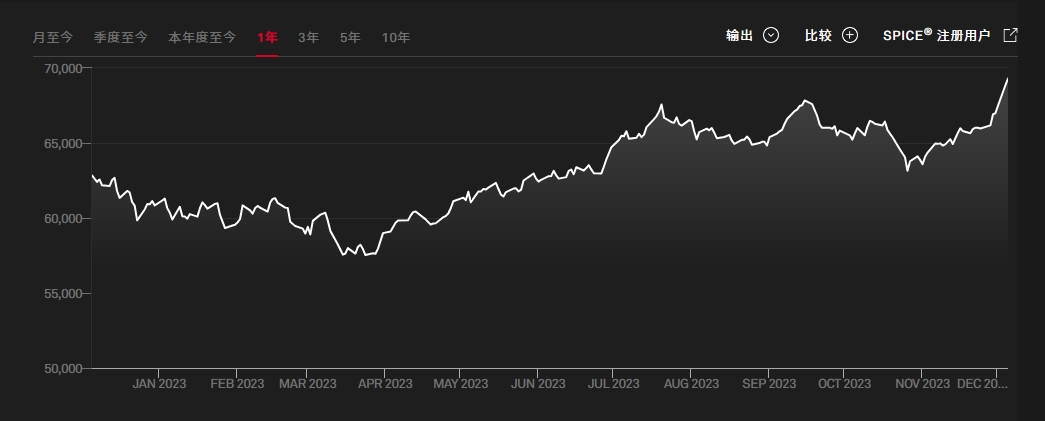
印度孟买SENSEX30指数(又称孟买敏感指数)为印度最被广泛使用的指数,为投资印度的重要参考指标,是由孟买证券交易所发行。由于各类媒体提到的“印度股市”,实际上都是孟买股票交易所,因此,该交易所的SENSEX-30指数几乎成了印度股市的代名词。