strawberry,英语单词,名词,意为“草莓;草莓色”。
本页面主要目录有关于strawberry的:单词发音、短语搭配、双语例句、单词解释等介绍

strawberry,英语单词,名词,意为“草莓;草莓色”。
本页面主要目录有关于strawberry的:单词发音、短语搭配、双语例句、单词解释等介绍
strawberry
草莓;草莓色
名词
英[ˈstrɔːbəri]美[ˈstrɔːberi]
Kiwi Strawberry奇异果草莓
Strawberry Swing草莓秋千 ; 小白魔兽日记 ; 我认为
Strawberry Tart草莓牛奶塔 ; 草莓塔 ; 草莓挞 ; 草莓蛋糕
Barren Strawberry子草莓 ; 无子草莓 ; 有子草莓 ; 一种花
Strawberry Hill草莓山庄 ; 草莓山酒店 ; 红莓阁
alpine strawberry林生草莓 ; 高山草莓 ; 野草莓
Strawberry flowers草莓花朵 ; 草莓花
Strawberry powder草莓粉 ; 草莓浓缩粉
strawberry aldehyde草莓醛 ; 甲基苯基环氧丙酸乙酯 ; 杨梅醛
Do you have strawberry?
你们有卖草莓吗?
Do you like the strawberry? Yes, I do.
你喜欢草莓吗?是的,我很喜欢。
I like strawberry.
我喜欢草莓。
The strawberry (Fragaria) is a genus of plants in the family Rosaceae, and the fruit of these plants. There are more than 20 named species and many hybrids and cultivars. The most common strawberries grown commercially are cultivars of the Garden strawberry, a Fragaria × ananassa hybrid. Strawberries are a valuable source of vitamin C.
Morphology
The strawberry is an accessory fruit; that is, the fleshy part is derived not from the ovaries (which are the "seeds", actually achenes) but from the peg at the bottom of the hypanthium that held the ovaries. So from a technical standpoint, the seeds are the actual fruits of the plant, and the flesh of the strawberry is a vegetable. It is greenish-white as it develops and in most species turns red when ripe.
The rosette growth of the plants are a well-known characteristic. Most species send out long slender runners that produce a new bud at the extremity. The leaves typically have three leaflets, but the number of leaflets may be five or one.
While the flower has the typical rosaceous structure, the fruit is very peculiar, but it may be understood by the contrast it presents with the rose hip of the rose. In a rose the top of the flower-stalk expands as it grows into a vase-shaped cavity, the hip, within which are concealed the true fruits or seed-vessels. In the rose the extremity of the floral axis is concave and bears the carpels in its interior. In the strawberry, the floral axis, instead of being concave, swells out into a fleshy, dome-shaped or flattened mass in which the carpels or true fruits, commonly called pips or seeds, are more or less embedded but never wholly concealed. A ripe strawberry in fact may be aptly compared to the fruit of a rose turned inside out.
Strawberries are now out of season.
Classification
There are more than 20 Fragaria species worldwide. Key to the classification of strawberry species is recognizing that they vary in the number of chromosomes. There are seven basic types of chromosomes that they all have in common. However, they exhibit different polyploidy. Some species are diploid, having two sets of the seven chromosomes (14 chromosomes total). Others are tetraploid (four sets, 28 chromosomes total), hexaploid (six sets, 42 chromosomes total), octoploid (eight sets, 56 chromosomes total), or decaploid (ten sets, 70 chromosomes total).
As a rough rule (with exceptions), strawberry species with more chromosomes tend to be more robust and produce larger plants with larger berries (Darrow).
Etymology
The name is derived from Old English streawberige which is a compound of streaw meaning "straw" and berige meaning "berry". The reason for this is unclear. It may derive from the strawlike appearance of the runners, or from an obsolete denotation of straw, meaning "chaff", referring to the scattered appearance of the achenes.
Interestingly, in other Germanic countries there is a tradition of collecting wild strawberries by threading them on straws. In those countries people find straw-berry to be an easy word to learn considering their association with straws.
There is an alternative theory that the name derives from the Anglo-Saxon verb for "strew" (meaning to spread around) which was streabergen (Strea means "strew" and Bergen means "berry" or "fruit") and thence to streberie, straiberie, strauberie, straubery, strauberry, and finally, "strawberry", the word which we use today. The name might have come from the fact that the fruit and various runners appear "strewn" along the ground.
Popular etymology has it that it comes from gardeners' practice of mulching strawberries with straw to protect the fruits from rot (a pseudoetymology that can be found in non-linguistic sources such as the Old Farmer's Almanac 2005). However, there is no evidence that the Anglo-Saxons ever grew strawberries, and even less that they knew of this practice.

新亚洲娱乐(英文名:ASIA ENTERTAINMENT GROUP LIMITED,全称:新亚洲娱乐联盟集团有限公司)是一家以从事戏剧制作人及杂项戏剧服务为主的企业,成立于1999年,位于香港特别行政区。旗下分公司包括虎威艺能创作有限公司(TGS HK)、稻草人娱乐创作社(Scarecrow Entertainment)、虎威王朝音乐创作股份有限公司(TGS Music)、虎威活力娱乐传播有限公司(TGS Taiwan)、AK Entertainment(Korea)以及AEG Korea等。
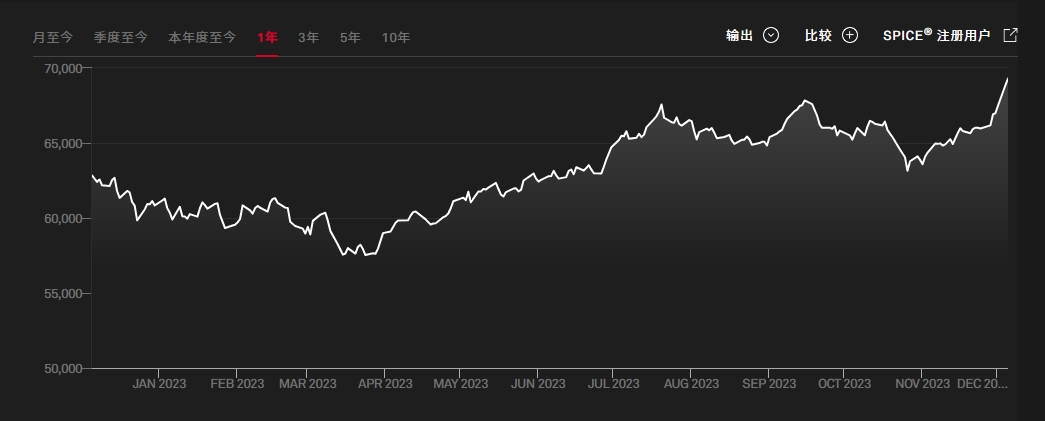
印度孟买SENSEX30指数(又称孟买敏感指数)为印度最被广泛使用的指数,为投资印度的重要参考指标,是由孟买证券交易所发行。由于各类媒体提到的“印度股市”,实际上都是孟买股票交易所,因此,该交易所的SENSEX-30指数几乎成了印度股市的代名词。