王平,教授,博士生导师,办公地点位于生科院生命医学研究所。通讯地址位于上海市闵行区东川路500号生命科学学院。研究方向为细胞信号传导、炎性细胞迁移的分子机制、肿瘤及干细胞中关键蛋白的调控机制。毕业于复旦大学生命科学学院生物系。
本页面主要目录有关于王平的:人物经历、主要贡献、获奖记录等介绍

王平,教授,博士生导师,办公地点位于生科院生命医学研究所。通讯地址位于上海市闵行区东川路500号生命科学学院。研究方向为细胞信号传导、炎性细胞迁移的分子机制、肿瘤及干细胞中关键蛋白的调控机制。毕业于复旦大学生命科学学院生物系。
本页面主要目录有关于王平的:人物经历、主要贡献、获奖记录等介绍
华东师范大学博士生导师
华东师范大学生命医学研究所
1997年毕业于复旦大学生命科学学院生物系,获理学学士学位;
2002年7月毕业于中科院上海细胞与生化研究所,获分子细胞生物学博士学位;
2003年到2008年先后在美国明尼苏达大学、康地涅克大学及耶鲁大学药学系做博士后研究。
2008年7月受聘于华东师范大学,任教授及博士生导师。
细胞信号传导
(1) 炎症信号传导:炎性细胞如中性粒细胞发生定向迁移的分子机制;血管内皮细胞在炎症发生中的作用及调控机制;炎症过程中白细胞与血管内皮细胞黏附的分子机制;炎症相关重大疾病。
(2) 肿瘤信号传导:肿瘤发生发展及转移中的重要调控蛋白(如AKT/Myc/PTEN/KLFs等)的翻译后修饰如泛素化及类泛素化、磷酸化及乙酰化以及与肿瘤发生的关系。
(3)干细胞信号传导:干细胞干性维持及分化过程中关键蛋白的翻译后修饰如泛素化、磷酸化及乙酰化调控。
项目类别 | 批准号 | 项目名称 | 资助时间与金额 | 本人任务 |
973计划 | 2012CB910404 | GPCR配体的高通量筛选及信号转导机理研究 | 2012.1-2016.12(340万) | 课题组长 |
973计划 | 2010CB529700 | 炎症过程中细胞间相互作用的信号转导机制及其应用研究 | 2012.1-2014.12(160万) | 课题骨干 |
国家自然科学基金优秀青年基金 | 31222037 | 细胞迁移与信号传导 | 2013.1-2015.12(100万) | 主持 |
国家自然科学基金面上项目 | 31171338 | PIP5K1C参与中性粒细胞极性及运动的信号传导机制研究 | 2012.1-2015.12(30万) | 主持 |
国家自然科学基金面上项目 | 30971521 | SCP1去磷酸化PIPKIγ90调控细胞迁移的机制与功能研究 | 2012.1-2012.12(30万) | 主持 |
国家自然科学基金青年项目 | 30800587 | b-Arrestins/PIPKIs结合调控GPCR相关信号通路的机制和功能研究 | 2009.1-2011.12(25万) | 主持 |
教育部“新世纪优秀人才计划” | NCET-10-0387 | 肿瘤抑制因子SCF-FBW7新功能的研究 | 2011.1-2014.12(50万) | 主持 |
上海市”科技启明星计划“ | 09QA1*4*01 900 | 细胞迁移重要蛋白PIPKIg90去磷酸化机制及功能研究 | 2009.7-2011.06(15万) | 主 |
1. Xiao N, Li H, Luo J, Wang R, Chen H, Chen J, Wang P.Ubiquitin-Specific Protease 4 (USP4) targets TRAF2 and TRAF6 for deubiquitination and inhibits TNFa-induced cancer cell migration. Biochem. J.(2012) 441,979-986
2. Wang Q, Xu X, Li J, Liu J, Gu H, Zhang R, Chen J, Kuang Y, Fei J, Jiang C, Wang P, Pei D, Ding S, Xie X. Lithium, an anti-psychotic drug, greatly enhances the generation of induced pluripotent stem cells. Cell Res. 2011 Jul 5. doi: 10.1038/cr.2011.108.
3. Wenwen Xu *,Ping Wang *#, Bj?rn Petri, Yong Zhang, Wenwen Tang, Le Sun, Holger Kress, Tom Mann, Yan Shi, Paul Kubes & Dianqing Wu#. Important Roles of PIP5K1C in Neutrophil RecruitmentImmunity2010 33(3): 340-50 (Co-corresponding author)
4. Li C, Yang Z, Li Z, Ma Y, Zhang L, Zheng C, Qiu W, Wu X, Wang X, Li H, Tang J, Qian M, Li D,Wang P, Luo J, Liu M. Maslinic acid suppresses osteoclastogenesis and prevents ovariectomy-induced bone loss by regulating RANKL-mediated NF-kappaB and MAPK signaling pathways.J Bone Miner Res.2010 Sep 2.
5. Liu N, Li H, Li S, Shen M, Xiao N, Chen Y, Wang Y, Wang W, Wang R, Wang Q, Sun J,Wang P. The Fbw7/hCDC4 tumor suppressor targets pro-proliferative factor KLF5 for ubiquitination and degradation through multiple phosphodegron motifs.J Biol Chem.2010 285(24):18858-67. (Corresponding author)
6. Wang Z, Kumamoto Y,Wang P, Gan X, Lehmann D, Smrcka AV, Cohn L, Iwasaki A, Li L, Wu D. Regulation of immature dendritic cell migration by RhoA guanine nucleotide exchange factor Arhgef5.J Biol Chem.2009 Oct 16; 284(42):28599-606.
7. Wang Z, Liu B,Wang P, Dong X, Fernandez-Hernando C, Li Z, Hla T, Li Z, Claffey K, Smith JD, Wu D. Phospholipase C beta3 deficiency leads to macrophage hypersensitivity to apoptotic induction and reduction of atherosclerosis in mice.J Clin Invest.2008 Jan 2;118(1):195-204
8.Ping Wang, Jing Nie and Duanqing Pei. The hemopexin domain of MT1-MMP is not required for its activation of proMMP2 on cell surface, but essential for MT1-MMP mediated invasion in 3-D type I collagen.J Biol Chem.2004 Dec 3;279(49):51148-51155,
9.Ping Wang, Xing Wang and Duanqing Pei. Mint-3 regulates the retrieval of internalized MT5-MMP to plasma membrane by binding to its carboxyl end motif EWV.J Biol Chem.2004 May 7;279 (19):20461-20470.
10.Ping Wang, Tortorella M, England K, Malfait AM, Thomas G, Arner L, Pei D. Proprotein convertase furin interacts with and cleaves pro-ADAMTS4 (aggrecanase-1) in the trans-Golgi network.J Biol Chem. 2004, April 9, 279(15):15434-15440.
11.Ping Wang*, Hua Gao*, Yanxiang Ni, Beibei Wang, Yalan Wu, Linhua Qin, Lan Ma, Gang Pei. b-arrestin 2 functions as a GPCR-activated regulator of oncoprotein Mdm2.J Biol Chem.2003 Feb 21; 278(8):6363-6370.
12.Ping Wang,Ya-Lan Wu, Xin Ge, and Gang Pei. Subcellular localization of beta-arrestins is determined by their intact N domain and the nuclear export signal at the C terminus.J Biol Chem. 2003 Mar 28;278(13):11648-11653.
13.Ping Wang*, Ya-Lan Wu*, Tian-Hua Zhou, Yue Sun and Gang Pei (2000), Identification of alternative splicing variants of the b subunit of human Ca/calmodulin-dependent protein kinase II with different activities.FEBS Letters475 (2000) 107-110.
14. Kun Ling*,Ping Wang*, Jian Zhao*, Ya-Lan Wu, Zhijie Cheng, Guo-Xiang Wu, Wei Hu, Lan Ma and Gang Pei. (1999) Five-transmembrane domains appear sufficient for a G protein-coupled receptor: Functional five-transmembrane domain chemokine receptors.Proc. Natl. Acad. Sci. USA.1999 July. 96: 7922-7927.
15. Jian Qiu,Ping Wang, Qing Jing, Wenbo Zhang, Xiaoyu Li, Yongping Zhong, Gang Sun, Gang Pei and Yizhang Chen. (2001) Rapid Activation of ERK1/2 Mitogen-Activated Protein Kinase by Corticosterone in PC12 Cells.Biochemical and Biophysical Research Communications287, 1017–1024.
16. Liguang Lou, Tianhua Zhou,Ping Wang, and Gang Pei. (1999). Modulation of Ca /Calmodulin-Dependent Protein Kinase II Activity by Acute and Chronic Morphine Administration in Rat Hippocampus: Differential Regulation of alpha and beta Isoforms.Molecular Pharmacology, 1999, 55:557–563.
17. Qing Jing, Sun-Mei Xin, Wen-Bo Zhang,Ping Wang, Yong-Wen Qin, Gang Pei.( 2000). Lysophosphatidylcholine Activates p38 and p42/44 Mitogen-Activated Protein Kinases in Monocytic THP-1 Cells, but Only p38 Activation Is Involved in Its Stimulated Chemotaxis.Circ Res. 2000;87:52-59.)
18. Jian Zhao, Lan Ma, Ya-lan Wu,Ping Wang, Wei Hu and Gang Pei (1998). Chemokine Receptor CCR5 functionally couples to inhibitory G protein and undergoes desensitization.Journal of Cellular Biochemistry 1998, 71:36-45. * co-first author
1. 2012年 基金委优秀青年基金计划支出;
2. 2011年 上海市‘曙光学者’人才计划;
3. 2010年 教育部新世纪人才计划;
4. 2009年 上海市‘青年科技启明星’人才计划;
5. 2006年 AHA Postdoctoral fellowship;
6. 2000年 中科院地奥奖学金;
7. 1999年 中科院伟华奖学金。

新亚洲娱乐(英文名:ASIA ENTERTAINMENT GROUP LIMITED,全称:新亚洲娱乐联盟集团有限公司)是一家以从事戏剧制作人及杂项戏剧服务为主的企业,成立于1999年,位于香港特别行政区。旗下分公司包括虎威艺能创作有限公司(TGS HK)、稻草人娱乐创作社(Scarecrow Entertainment)、虎威王朝音乐创作股份有限公司(TGS Music)、虎威活力娱乐传播有限公司(TGS Taiwan)、AK Entertainment(Korea)以及AEG Korea等。
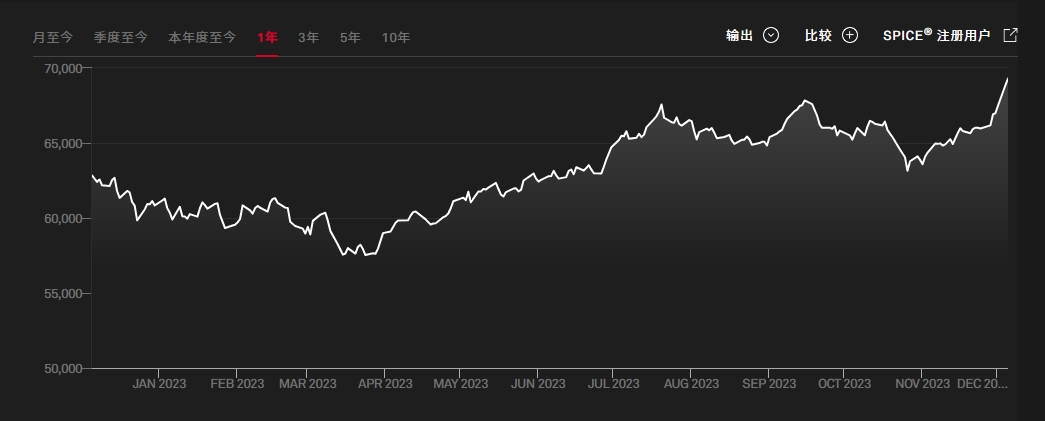
印度孟买SENSEX30指数(又称孟买敏感指数)为印度最被广泛使用的指数,为投资印度的重要参考指标,是由孟买证券交易所发行。由于各类媒体提到的“印度股市”,实际上都是孟买股票交易所,因此,该交易所的SENSEX-30指数几乎成了印度股市的代名词。